Der Beitrag How Can I Apply for a GLN / GTIN / SSCC? erschien zuerst auf ecosio.
]]>Before we discuss how to apply for a GLN / GTIN or SSCC, let’s first look at the GS1 system…
GS1 is a global standardization organization with the goal of simplifying value creation processes by developing global standards. GS1 is funded by the fees that organizations pay to participate in the GS1 system. The developed standards revolve around the following four main areas:

GS1 identification numbers fall under the Identify category and are used for global, non-conflicting and unique identification. GLNs – Global Location Numbers are used to uniquely identify companies and divisions. GTINs (Global Trade Identification Numbers) are used to uniquely identify products and services and SSCCs (Serial Shipping Container Code) for the unique identification of carriers.
The basis for all numbers in the GS1 identification number system is a GS1 base number. Based on the GS1 base number, the other numbers such as GLN, GTIN or SSCC can then be formed.
Learn how fully managed EDI could help to boost your business
How to apply for a GLN number
GLNs are awarded by the country offices of GS1. To apply for a GLN, please contact your country organization.
Do you have any questions?
Do you still have questions about applying for a GLN / GTIN / SSCC? Feel free to contact us, we would love to help you!
Der Beitrag How Can I Apply for a GLN / GTIN / SSCC? erschien zuerst auf ecosio.
]]>Der Beitrag What is a GTIN? erschien zuerst auf ecosio.
]]>GTIN is the abbreviation for Global Trade Identification Number. As with GLN, the acronym already contains the term “number”, so we’re just speaking about GTIN instead of GTIN number.
In many cases, the old term EAN (European Article Number) is still used today.
What do I need a GTIN for?
A GTIN is used the unique identification of products and services without any overlapping between two items. Thus, a GTIN guarantees the global uniqueness of a product or service identification. Let’s take a supermarket for example. Identifying specific products by only using their names is not suitable for the following reasons:
- Different products can have the same or a similar name
- The same product can be referred to by different names from different supply chain participants. The manufacturer of a product could name it
Milk skimmed 1lwhereas the logistics company would call itProducer xyz Milk skimmed 1land the offering supermarket usesExtra skimmed milk 1l. Without having a strict and unique identification key, such as a GTIN, the integration of supply chains can be very challenging, as misunderstandings in communication tend to happen more often than not. - Names are generally bad for the identification of products in EDI transactions. IT professionals prefer using unique identifiers that allow for an unambiguous and non-overlapping identification. In the context of databases, one would refer to these as primary keys.
GTINs are a huge help as they allow the unique identification of products throughout multiple companies and different countries.
Especially as a small or medium sized business, one gets confronted with GLN and GTIN when trying to implement EDI with a (typically larger) trading partner. In the course of exchanging invoices, advance shipping notices, orders etc. with these partners, GTINs will be used for the identification of products and services.
How is a GTIN structured and what is the link to a GLN?
In one of our latest blog posts we have already looked at the usage of Global Location Numbers – GLN for the unique identification of companies. There is a direct link between a company’s GLN and the GTINs it is using.
To create a GTIN, a company needs to be in possession of a GS1 company prefix. The assigned company prefix forms the base for the creation of all GS1 identifiers like GLN, GTIN and SSCC numbers. Once again, the following picture shows the structure of a GLN (GS1 prefix number 9012345) as well as the example GLN 9012345000004.

Based on the GS1 company prefix, it is possible to create multiple GTINs. Depending on the purchased GS1 prefix license, the company can create up to 100,000 GTINs.
The GTIN is generated by using the GS1 company prefix number, following with the item reference and ending with a checksum. The first three digits of the GS1 company prefix is the GS1 country code which can be used to acquire the country where the GS1 company prefix was assigned in.
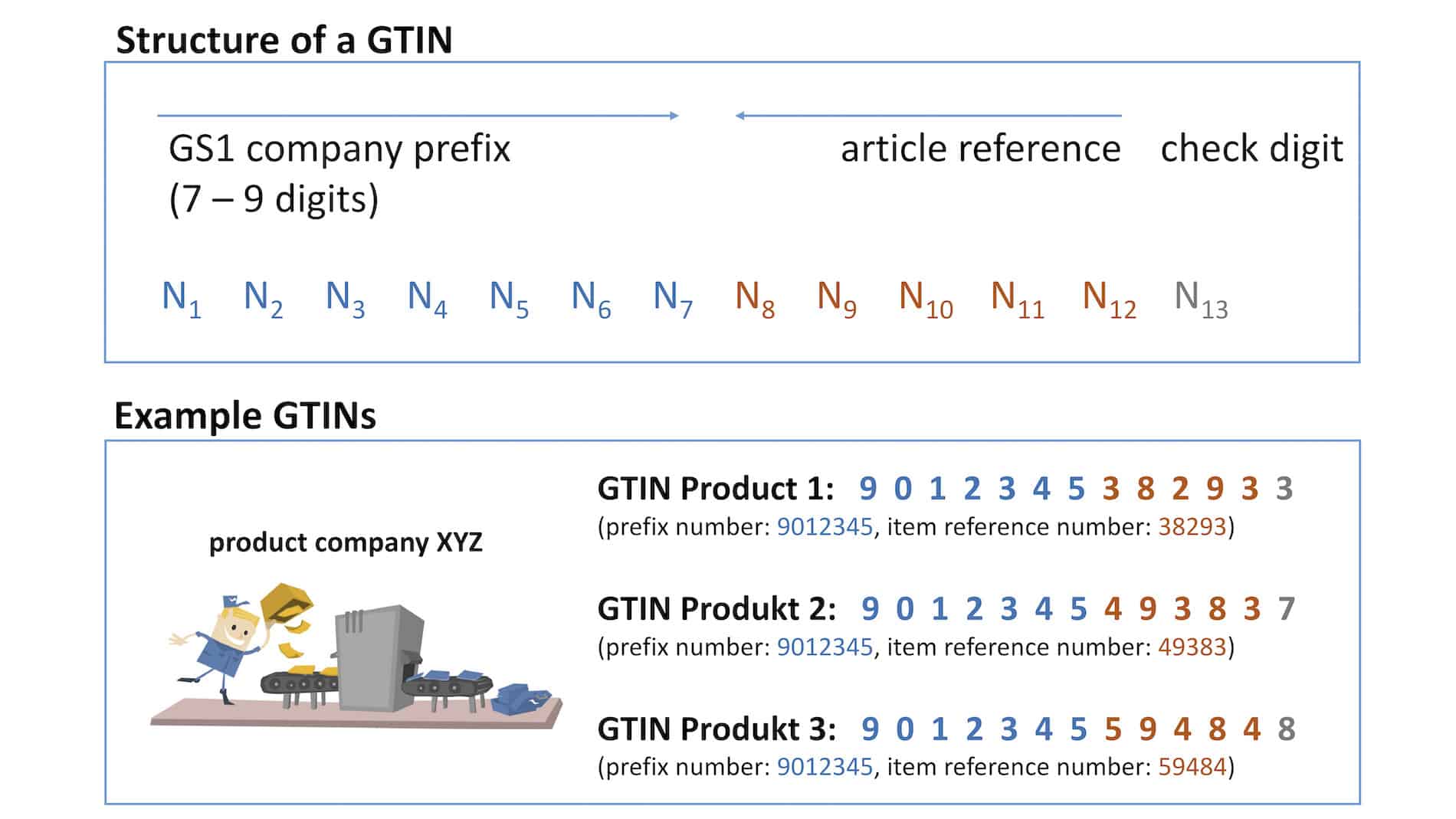
The image above shows the structure of a 13-digit GTIN. Apart from the 13-digit GTIN, there are also 8, 12 and 14-digit GTINs. The difference between the GTIN classes is also explained on the GS1 website.
Is there a connection between the barcode of a product and its GTIN?
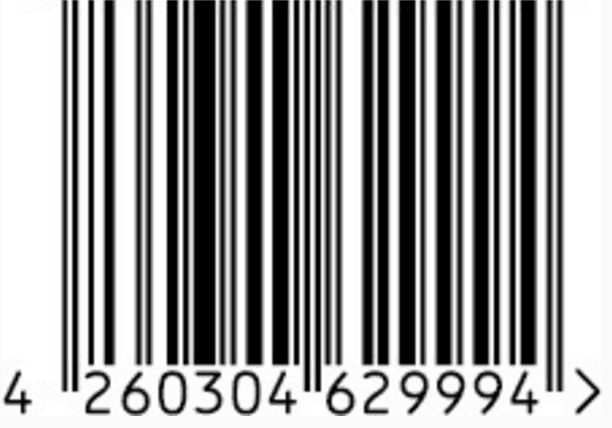
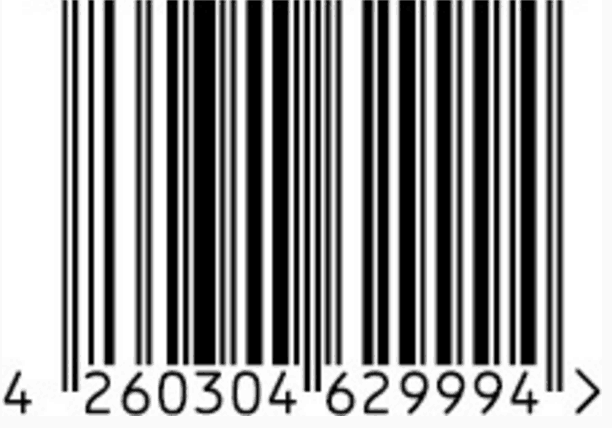
Whenever possible, the GTIN will be attached to the product via a barcode label. This label contains the GTIN in a coded form, allowing it to be read automatically. The scanning is typically done using a barcode reader, similar to the way items are scanned at the checkout till in a supermarket. The following image shows an example barcode with its attached GTIN as found on regular products.
Can the GTIN be used to identify the associated company?
Like with a GLN, it is not possible to identify the related company by looking at the GTIN only. To find out who the GTIN belongs to, one must use the directories of the appropriate GS1 organization or ask the company directly, which GTINs are in use. The GS1 directories are called GEPIR (Global Electronic Party Information Register).
Please note: There are companies who don’t publish a full set of their GLNs and GTINs in the GEPIR directories.
Which requirements are needed to be able to use a GTIN?
Let us summarize the necessary requirements a company needs to satisfy to make use of a GTIN:
- A GS1 company prefix, which is used as the base for GTINs. Depending on number of GTINs needed, there are multiple prefix classes one can choose from. For further details please refer to the following blog post on the topic of GLNs.
- Internal article numbers are needed for the article reference in the GTIN (see illustration above).
- Checksum for the created GTIN base numbers. (GS1 company prefix + article reference)
- An implementation of the GTINs in the internal IT systems as well as an EDI connection to the trading partners, such as customers and suppliers.
Do you have any questions?
Do you still have questions about GTINs? Feel free to contact us, we would love to help you!
Der Beitrag What is a GTIN? erschien zuerst auf ecosio.
]]>Der Beitrag What is a Global Location Number (GLN)? erschien zuerst auf ecosio.
]]>GLNs — short for Global Location Number — are used for the unique and unambiguous identification of legal entities and physical locations.
Legal entities may for instance be companies, administration bodies, customers, suppliers, service-providers, banks, etc. Physical locations may be addresses, single buildings, storage sites — even a single loading platform in a cross-docking warehouse. In addition GLNs may be used as unique identifiers for participants in electronic data interchange (EDI) — similar to email addresses in an email system.
The often used term GLN-number is actually wrong, since number is already contained in the acronym GLN. In the following only the term GLN is used.
For small and medium-sized businesses a single GLN is usually sufficient. Enterprises with several branches and large corporations require multiple GLNs. A reference value: Billa (a subsidiary of the German REWE corporation in Austria) has more than 1,000 GLNs in use in Austria. In Germany, EDEKA, which is by far the largest supermarket, uses more than 10,000 GLNs for the different branches, ware houses, cross docking locations, etc.
Today one may sometimes hear people affiliated with electronic data interchange talking about International Location Numbers (ILN). ILN is the old term for a GLN.
Learn how fully managed EDI could help to boost your business
What is the structure of a Global Location Number?
A GLN is a 13-digit number consisting of a GS1 company prefix, a location reference, and a check digit. The following figure shows the structure of a GLN and two exemplary GLNs.
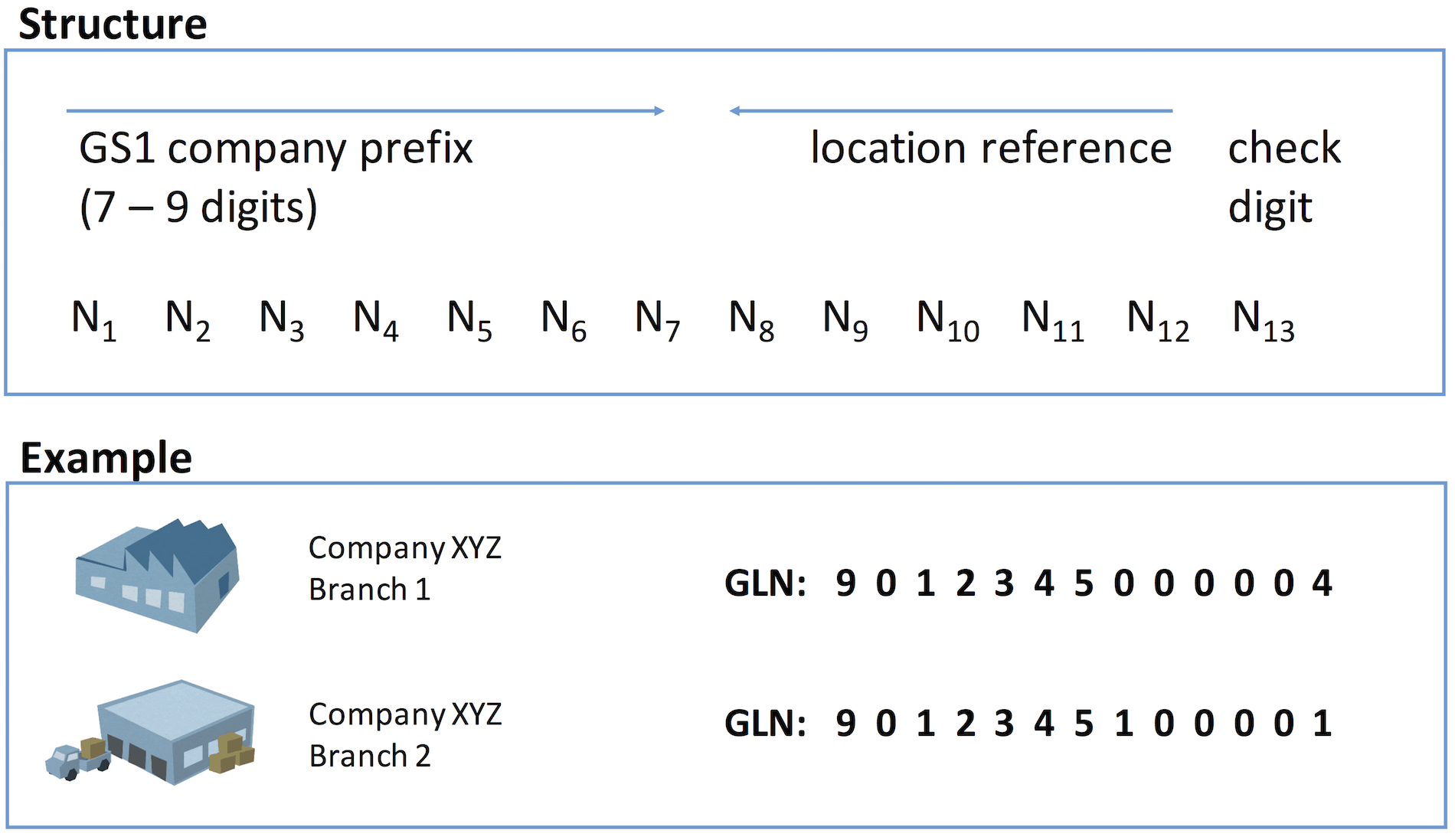
The GS1 company prefix is assigned by a GS1 member organization to a specific subscriber (e.g., a company).
The location reference is assigned by the company itself to identify a specific location.
The check digit is calculated from the first twelve digits and helps to ensure the integrity of the number.
One may not directly infer the company to which a GLN is assigned to, from the GLN digits directly, i.e., no company information is “coded” in the GLN. Instead one must fetch a directory service, offered by GS1, in order to retrieve the company details for a given GLN. The GS1 directory services are called GEPIR (Global Electronic Party Information Register).
Note, that not all companies publish their GLNs in the GEPIR directories. Although most of the companies do, there are some which deliberately choose to conceal the GLNs and the associated company details.
The GS1 company prefix forms the basis for additional identifiers, issued by GS1. For example GTINs (Global Trade Identification Numbers) or SSCCs (Serial Shipping Container Code) are generated on the basis of a GS1 company prefix.
GTINs are used for the unique and unambiguous identification of products and services. Just take a closer look at a bar code on an arbitrary consumer product near you — you’ll note the number below the bar code — this is a GTIN.
SSCCs, on the other hand, are used for the unique identification of logistic units, such as pallets, cases, cartons, or air traffic containers.
Why do I need a GLN when I have a postal address?
Postal addresses are indeed important for a company — the help clients to find your company using their GPS-based navigation device, they ensure that postal letters of your suppliers and customers end up in the right post box, etc. However, postal addresses are a bad identifier when it comes to electronic processes.
The following example shows the dilemma with postal addresses:
Store John Doe, L.A. branch, 4711 Park Avenue, CA 90210
John Doe Store, Los Angeles branch, 4711 Park Ave. Beverly Hills, CA 90210
A human quickly realizes that both addresses are semantically identical, but only written in a different way. IT systems, however, rely on unique and unambiguous identifiers. Thus, postal addresses represent bad identifier types, when it comes to IT-systems.
That’s where a Global Location Number comes into play.
In order to uniquely and unambiguously identify a company (or parts of a company) in an IT system, GLNs are used.
Who guarantees, that a GLN is unique?
GLNs are issued by Global Standards One (GS1) – usually by one of the national GS1 organizations. In the United Kingdom this is for instance GS1 UK or in the United States GS1 US. European examples include GS1 Germany, GS1 Austria, or GS1 Switzerland.
How much does a GLN cost?
GLNs are issued by the local GS1 organizations in the different countries. Thus, prices for GLNs may vary from country to country. The following prices are from GS1 Germany and may serve as a reference for the prices in other countries.
Currently, GS1 Germany offers GLNs in three different contingents. Depending on the type of GLN, different amounts of article numbers (GTIN) and logistic unit identifiers (SSCC) may be generated.
Small
Recommended for small enterprises with a limited set of articles.
Length of base number: 9 digits
Capacity: 1,000 article numbers and 10 million logistic units.
Costs: 230 EUR plus VAT
Medium
Recommended for medium-sized businesses.
Length of base number: 8 digits
Capacity: 10,000 article numbers and 100 million logistic units
Costs: 330 EUR plus VAT
Large
Recommended for large businesses
Length of base number: 7 digits
Capacity: 100,000 article numbers and 1 billion logistic units
Costs: 530 EUR plus VAT
Where can I apply for a GLN?
GLNs are issued by GS1. Contact your national GS1 office in order to apply for a GLN.
GLN, and then?
If you plan to use a GLN for your electronic data interchange processes, you require an EDI service provider. The EDI service provider takes care of connecting you local IT systems to the EDI processes of your business partners. In case you have any question in regard to EDI or GLN do not hesitate to contact us — we are happy to help you.
For information on how to apply for a GLN, feel free to read our article “How Can I Apply for a GLN / GTIN / SSCC?” on this subject.
Questions about GLN?
Do you have any more questions about GLN or EDI? Please do contact us or use our chat — we’re more than happy to help!
Der Beitrag What is a Global Location Number (GLN)? erschien zuerst auf ecosio.
]]>